Where Standard Analysis Ends,

el Begins.

Where Standard

Analysis Ends, el

Begins.

Where Standard Analysis

Ends, el Begins.

* Service-Gas Analysis & Sampling

We provide qualitative and quantitative gas analysis services for customers who cannot easily perform gas analysis in-house.

Using QMS-based technology, we cover what conventional GC and FT-IR cannot — including low-vacuum ultra-trace gases, above-atmospheric pressure samples, and absolute component quantification — all in a one-stop service from on-site sampling to laboratory-grade precision.

* WHY ANALYSIS

Why Conventional Analysis Falls Short

GC and FT-IR remain widely used gas analysis tools, but both have limitations in semiconductor and OLED applications. GC requires batch sampling and
laboratory transport, while FT-IR struggles with ultra-low concentration detection and complex multi-component gas mixtures.

el's QMS-based platform overcomes these challenges by enabling wide-pressure-range analysis, simultaneous multi-component identification, and absolute
quantification in a single measurement cycle.


Conventional vs. el Analysis
Capability
GC / FT-IR
el (QMS-Based)
Low-vacuum gas analysis
Not supported
Supported
Above-atm pressure samples
Limited / risky
Supported
Ultra-trace detection (ppm)
FT-IR only (limited)
5 ppm ±3%
Absolute component quantity
Indirect calculation
Direct measurement
Multi-component simultaneous
GC: sequential only
Simultaneous
On-site sampling + lab analysis
Separate workflows
One-stop service

* Service Overview

Service Scope & Analytical Capabilities

From on-site sampling to laboratory analysis, el delivers complete qualitative and quantitative gas analysis across diverse industries.

01

Qualitative Analysis (Component Identification)

Identification of all gas species by mass-to-charge ratio: O₂, N₂, H₂, Ar, CO₂, CO, H₂O, and complex organic/fluorinated species in a single scan.

02

Quantitative Analysis (Concentration & Absolute Amount)

Precise concentration measurement (ppm-level) and absolute quantity of each component. Ideal for sealed enclosure gases where total volume is known.

03

On-Site Sampling (Field Collection to Lab Analysis)

Proper sample collection from process lines, enclosures, tunnels, or confined spaces. End-to-end chain of custody from site to laboratory report.

* Application Areas

Application Areas
& Sample Types

Explore how el's gas analysis services are applied across different industries, sample types, and measurement objectives.

Industry / Application
Sample Type
Key Analysis Need
OLED Display
Internal cell gas (sealed enclosure)
Outgassing ID, moisture & O₂ contamination, absolute quantity measurement
Semiconductor Fab
Process line gas, vacuum chamber residual
Trace contaminant ID, multi-component composition, sub-ppm species detection
Steel / Metal Industry
Furnace gas, ladle atmosphere, process exhaust
CO, CO₂, H₂, N₂ composition; trace impurity monitoring
Power Generation
SF₆ insulation gas (transformers, switchgear)
Decomposition product analysis, purity verification, leak detection
Construction / Tunneling
Confined space air, tunnel excavation atmosphere
Hazardous gas ID (CO, H₂S, CH₄, NO₂), occupational safety assessment
R&D / Materials Science
Novel material outgassing, vacuum system cleanliness
Outgassing rate, species identification, ultra-trace level characterization

* Service Process

From Sampling To Report

A complete one-stop service — from sample collection to certified analysis report.

STEP 01

Consultation & Sample Plan

Understand sample type, application context, target species, required detection limits, and whether field sampling is needed.

STEP 02

On-Site Sampling

el engineers collect samples from process lines, sealed enclosures, confined spaces, or exhaust streams using appropriate containers.

STEP 03

Laboratory Analysis

QMS-based analysis (isepa system) — simultaneous multi-component qualitative and quantitative analysis. Detection to 5 ppm ±3%.

STEP 04

Report & Consultation

Complete analysis report with species identification, concentrations, and absolute quantities. Technical consultation on results and recommended follow-up.

* What Sets Apart

Beyond Analysis, Delivering Confidence.

From sampling to reporting, el delivers reliable gas analysis beyond conventional methods.

01

Beyond GC & FT-IR — QMS-Based Platform

el's isepa system uses QMS to analyze gas samples across the full pressure range — from low vacuum to above atmospheric pressure. This enables analysis of sample types physically incompatible with GC or FT-IR, including sealed OLED cell gases and pressurized SF₆ containers.

02

Absolute Quantity Measurement

Unlike concentration-only techniques, el measures the absolute amount of each gas component inside a sealed sample. Critical for OLED panel quality control, sealed package leak assessment, and any application where total gas inventory matters.

03

20 Years of Low-Vacuum Ultra-Trace Expertise

Since 2004, el has specialized in low-vacuum gas analysis — requiring precise vacuum system engineering, calibration methodology, and ion source management. This enables reliable measurement at sensitivity levels standard service labs cannot achieve.

04

One-Stop Service — Field to Report

From on-site sample collection to laboratory analysis and final consultation, el manages the complete workflow. Single point of contact, consistent chain of custody, results directly applicable to quality decisions, safety assessments, or regulatory reporting.

* Case Studies

Putting gas analysis where it matters most.

Tunnel Construction

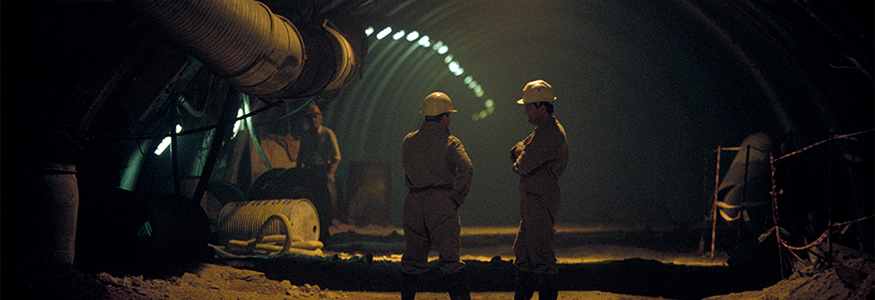
Hyundai E&C: Tunnel Construction Site (Jan 2022)

Application
Underground tunnel construction — confined space gas hazard assessment
Challenge
Tunnel construction workers operate in enclosed spaces with limited ventilation. Portable gas detectors provide only binary alerts and cannot identify specific gases or precise concentrations. Standard GC-based lab analysis was impractical given remote site location and need for rapid turnaround.
el's Approach
On-site sampling of the tunnel atmosphere using appropriate collection vessels, followed by QMS-based multi-component analysis identifying the full gas composition including trace hazardous species.
Outcome
Complete gas composition profile delivered, enabling the site safety team to identify specific hazardous gas sources, assess risk levels, and implement targeted ventilation and safety measures.

OLED Display

OLED Cell Internal Gas Analysis

Application
OLED display panel — internal cell gas quality verification
Challenge
OLED panels are sealed at manufacture. Outgassing from organic layers or contamination during sealing can degrade luminance, lifetime, and color accuracy over time. Standard methods cannot access sealed cell gas; even then, GC cannot measure absolute quantities inside a fixed-volume enclosure.
el's Approach
el extracts the internal gas from sealed OLED cells under controlled vacuum conditions, then performs simultaneous qualitative identification and absolute quantification of all gas species using the isepa QMS system.
Outcome
Complete picture of the internal atmosphere — identifying outgassing species, moisture ingress, and unexpected contaminants — enabling root-cause analysis of panel degradation and process optimization.

* Frequently Asked Question

FAQ list

What types of gas samples can el analyze?

el can analyze virtually any gas-phase sample — from low-vacuum residual gases (below atmospheric pressure) to above-atmospheric pressure samples in pressurized containers. Sample types include process line gases, sealed enclosure atmospheres (OLED cells, vacuum packages), environmental air from confined spaces, and specialty industrial gases such as SF₆.

What is the detection limit of el's QMS analysis?

Our standard QMS (isepa) analysis achieves detection down to 5 ppm ±3% for common species. Ultra-trace protocols for specific applications are available on request.

How does el analyze the gas inside a sealed OLED panel without destroying it?

el uses a controlled vacuum extraction procedure to access the internal atmosphere of sealed OLED cells. The extracted gas is analyzed by QMS, delivering simultaneous qualitative identification and absolute quantification of all species present.

Can el handle samples from pressurized containers — e.g. SF₆ gas cylinders?

Yes. el has experience collecting and analyzing gases from above-atmospheric pressure containers, including SF₆ insulation gas from power equipment. Our sampling procedures include appropriate pressure management.

How long does the full service take from inquiry to report?

For standard laboratory samples, reports are typically delivered within a few business days after receipt. For on-site sampling projects, lead time includes scheduling the field visit. Contact us for a project-specific timeline.

Is on-site sampling available nationwide, or only in the Daejeon area?

el provides on-site sampling services nationwide across Korea, and has experience at overseas sites as well. Travel scope and scheduling are confirmed during the initial consultation.

* CONTACT US

Need gas analysis your current instruments can't handle?

From the first consultation to the final analysis report — el manages the full process.
Tell us about your sample and measurement challenge, and we'll design the right analysis plan for you.